

Family Emergency Communication Plans: What to Decide Before Cell Networks Are Busy
Published May 25, 2026
View the current dashboard
HazardNow brings multiple public signals into one situational-awareness view. Open the live dashboard to review current indicators alongside the context in this article.
HazardNow provides context from public sources and is not a replacement for official alerts or emergency instructions.
During major disruptions, communication networks can become congested or degraded. A household communication plan reduces confusion when contact is harder.
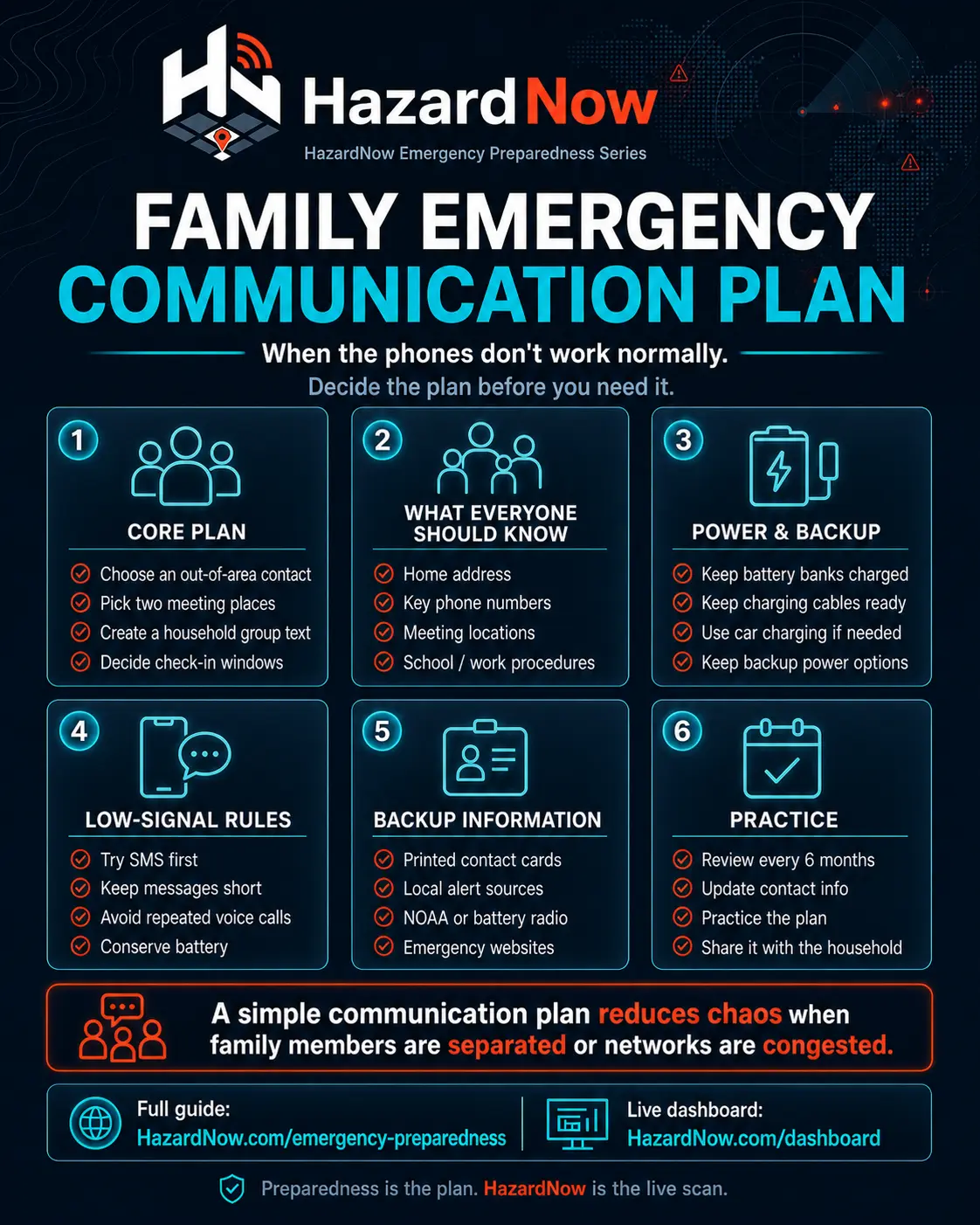
Core plan elements
- One out-of-area contact everyone can call or text
- A household group text for non-emergency updates
- Two meeting places (nearby and out-of-neighborhood)
- Printed contact cards in wallets and go bags
- Backup charging options and charging rotation
- Check-in windows (for example every 2–4 hours during disruptions)
FCC and FEMA guidance generally supports brief calls, SMS/text for routine check-ins when networks are busy, and battery conservation habits.
NOAA Weather Radio or other official local alert channels can also provide resilience when mobile networks are strained.
Use the HazardNow live dashboard as one context layer, then verify important details with official local sources. For related planning, review emergency preparedness guidance and see what HazardNow tracks.
HazardNow is not a communication system and does not replace 911, Wireless Emergency Alerts, or official alert channels.
Related HazardNow guides
Use these supporting pages to connect this article with the live dashboard, source notes, and preparedness guidance.
Continue exploring HazardNow
Review current public signals on the live dashboard, compare them with historical county records, see what data categories HazardNow tracks, or build a practical preparedness routine before conditions change.
- See today’s live U.S. hazard conditions
- FEMA and NOAA disaster history by county
- What HazardNow tracks
- Emergency preparedness
- FAQ
- Data sources
For official alerts, warnings, evacuation notices, or emergency instructions, use authoritative sources and local agencies.