Daily situational awareness checklist
Morning/evening routine for weather, outages, smoke, and travel context.
Open guideA concise emergency preparedness checklist and emergency preparedness guide for plans, kits, maps, communication, and live situational awareness.
HazardNow supports situational awareness and preparedness. Always follow official alerts, evacuation orders, and instructions from local emergency management and public safety agencies.
Open these plain-English guides, then confirm current conditions in the live dashboard and official local alerts.
Daily situational awareness checklist
Morning/evening routine for weather, outages, smoke, and travel context.
Open guideEvacuation trigger checklist
Early-departure triggers when risk increases or routes may degrade.
Open guidePower outage food safety
Food safety and medication checks during outages.
Open guideGenerator safety + carbon monoxide
High-priority generator placement and CO safety reminders.
Open guideWildfire smoke home readiness
AQI and PM2.5 actions with cleaner-air room setup.
Open guideEmergency fuel planning
Fuel thresholds and rotation without panic buying.
Open guideShareable field guides
Save and share these printable guides: go bag checklist, home emergency kit, family emergency communication plan, emergency maps, and shelter in place vs evacuate.

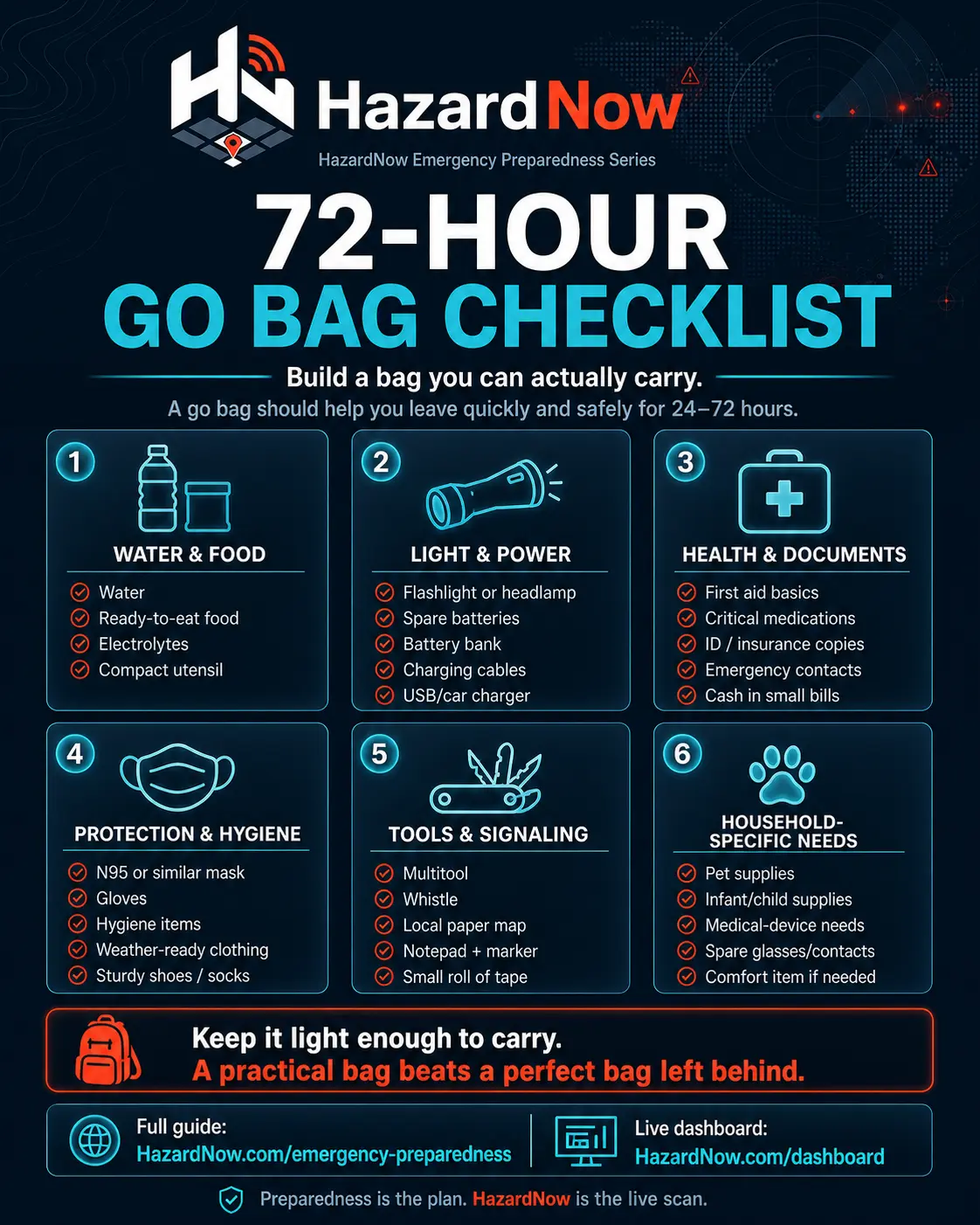
Go Bag
Build a practical go bag for 24–72 hours with essentials for food, water, power, documents, first aid, and household-specific needs.

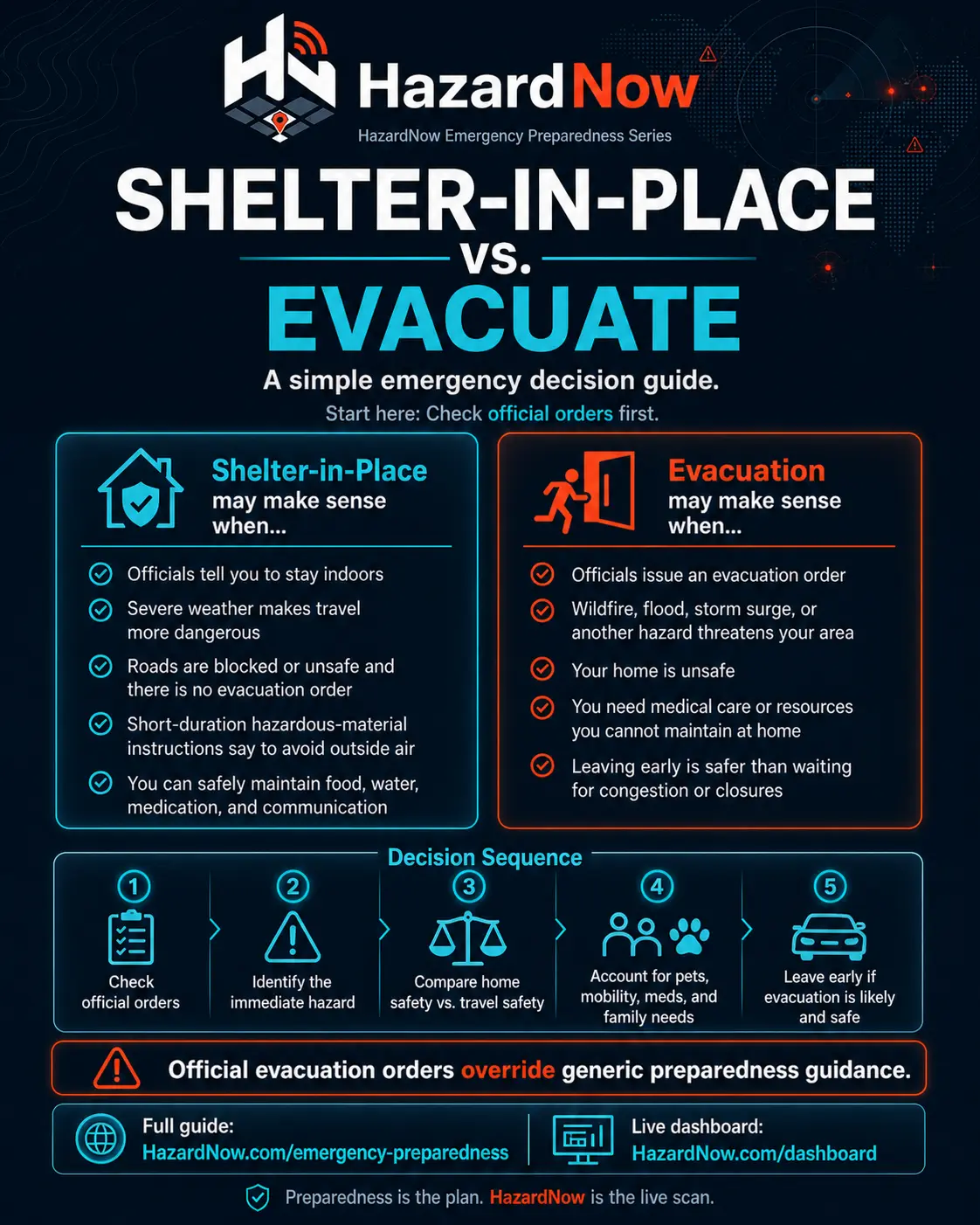
Decision Guide
A simple visual decision guide for when sheltering may make sense, when evacuation may make sense, and why official orders come first.

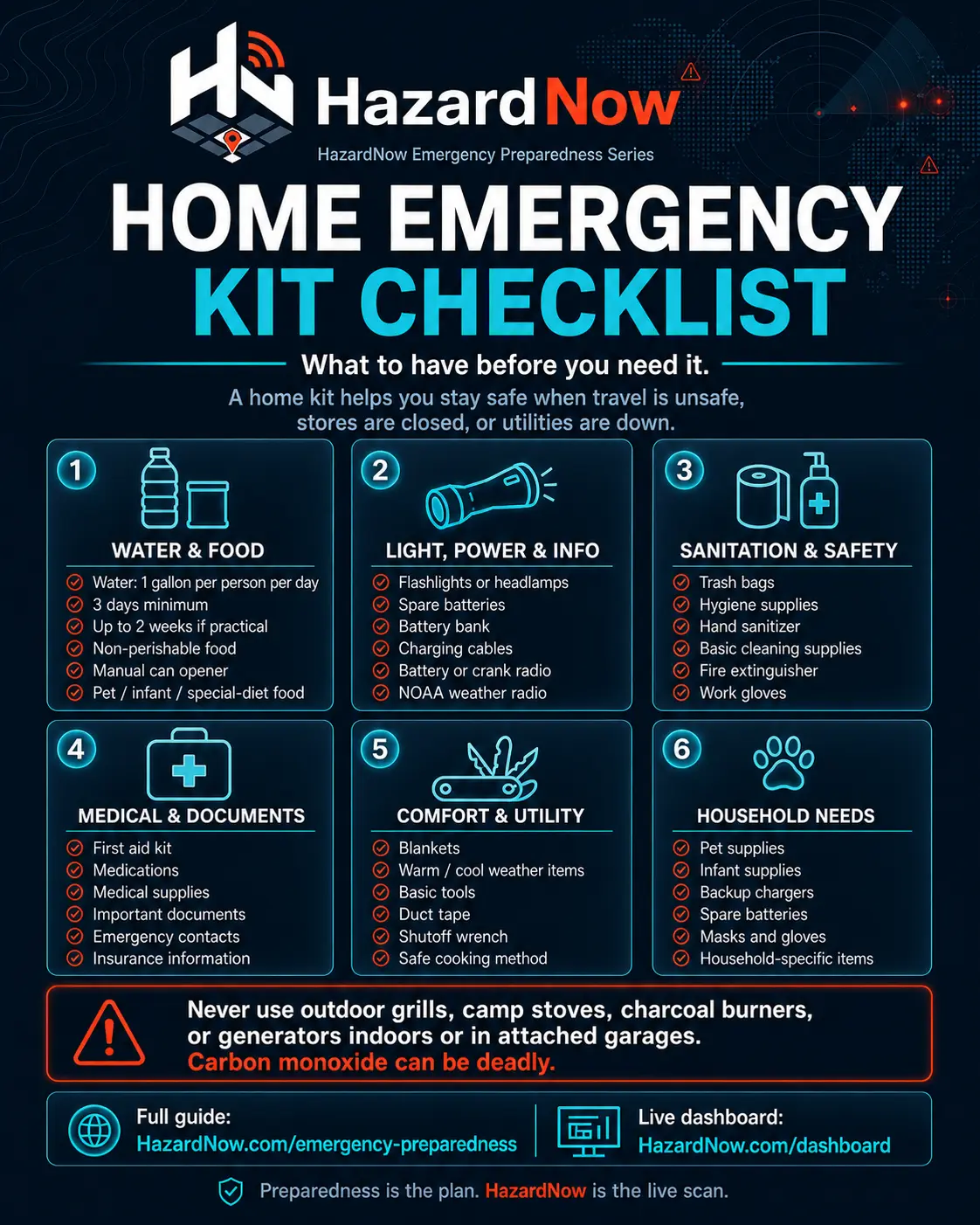
Home Kit
A practical home emergency kit checklist for water, food, power, sanitation, first aid, documents, and safe home readiness.

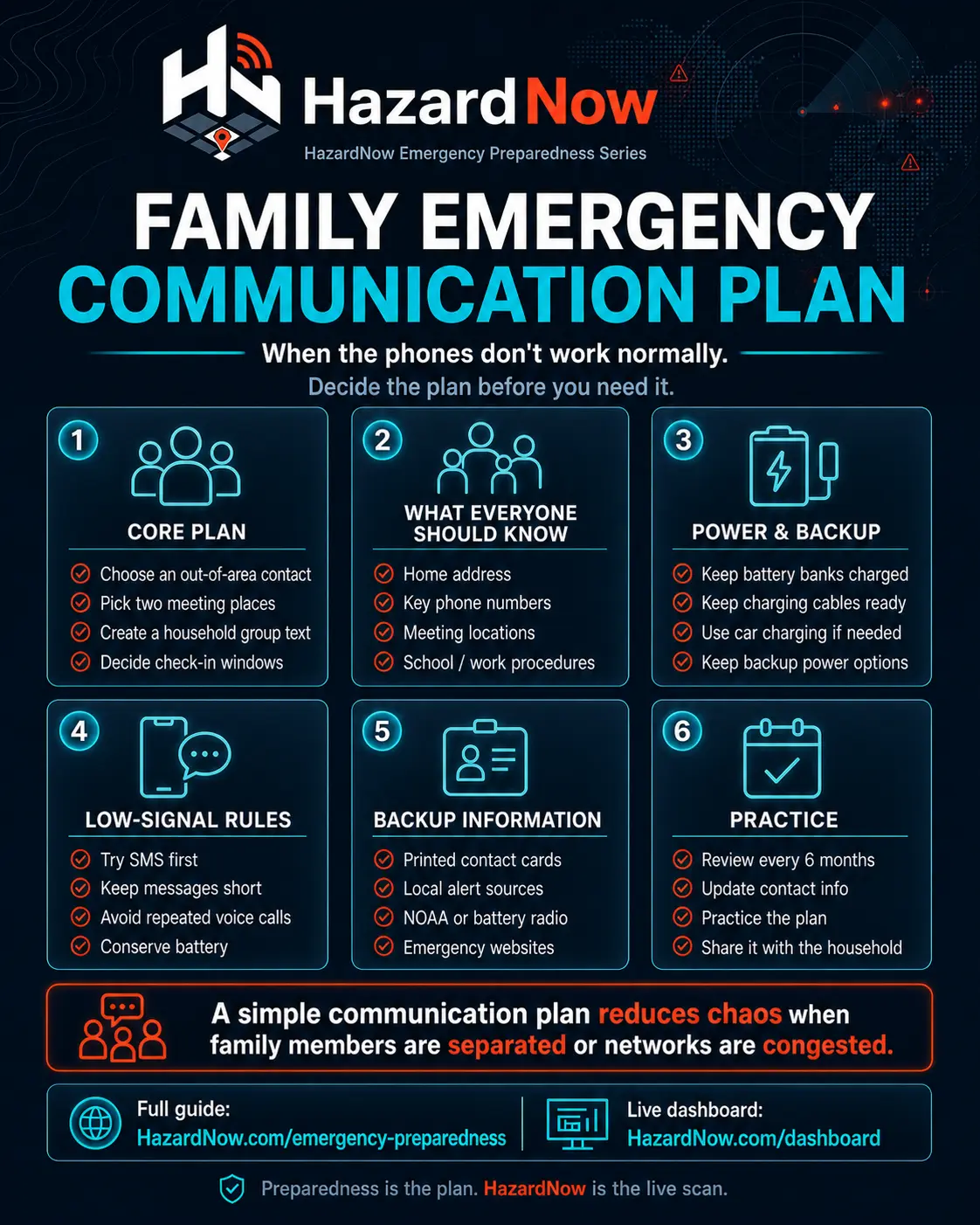
Communication
A visual guide to out-of-area contacts, group text planning, meeting places, backup charging, and what to do when networks are overloaded.

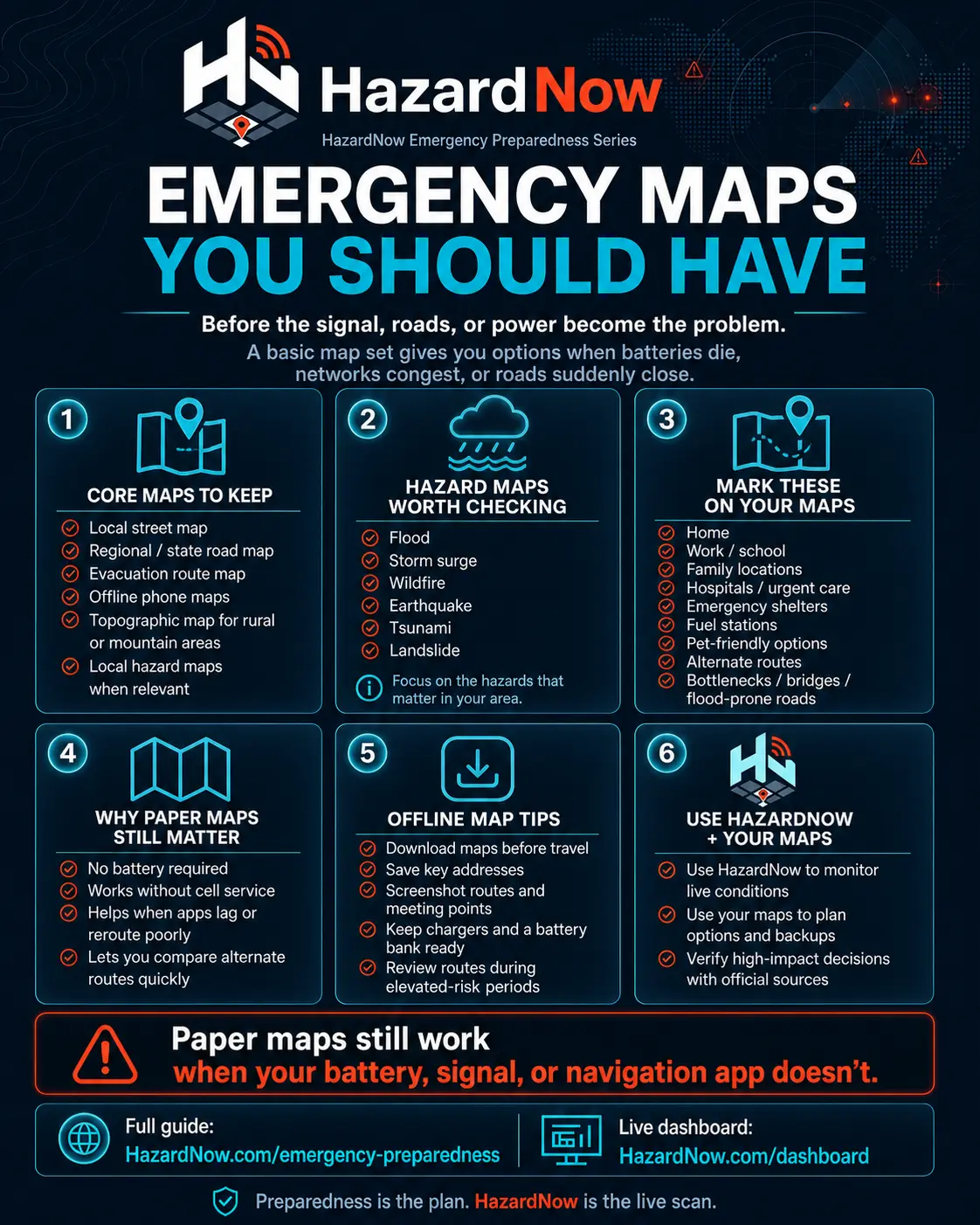
Maps
A guide to the paper, offline, evacuation, and local hazard maps worth keeping before roads, batteries, or connectivity become the issue.
Emergency maps reduce dependence on power, data, or cell coverage when routes and conditions change quickly.
Related printable guide:Emergency Maps You Should Have
A family emergency communication plan prevents confusion when calls fail or household members are separated.
Related printable guide:Family Emergency Communication Plan
Related printable guide:72-Hour Go Bag Checklist
Related printable guide:Home Emergency Kit Checklist
Related printable guide:Maps + routes guidance
Related printable guide:Home Emergency Kit Checklist
Public-health surveillance can help you notice broader respiratory-illness signals, but it is not diagnosis, treatment guidance, or medical advice.
Official evacuation orders override generic preparedness guidance.
Related printable guide:Shelter-in-Place vs. Evacuate
Use this emergency preparedness guide to plan ahead, then use the situational awareness dashboard to monitor live conditions and broader context.
Related explainers
HazardNow Learn
Include water, food, light, communications backup, first aid, medications, documents, sanitation supplies, and household-specific items. Keep both a go bag and a home kit.
Use at least one gallon per person per day. Keep three days minimum and build toward up to two weeks at home where practical.
A go bag supports 24–72 hours on the move. A home kit supports sheltering in place for longer disruptions.
Follow official instructions first. Shelter when directed indoors or travel is unsafe; evacuate when ordered or home safety is degrading.
Keep local street maps, regional road maps, evacuation routes, offline phone maps, and locally relevant hazard maps.
Set an out-of-area contact, check-in windows, short SMS habits, and backup charging/radio options before an incident.