

Home Emergency Kits: What to Keep When Leaving Is Not the Best Option
Published May 21, 2026
View the current dashboard
HazardNow brings multiple public signals into one situational-awareness view. Open the live dashboard to review current indicators alongside the context in this article.
HazardNow provides context from public sources and is not a replacement for official alerts or emergency instructions.
A home emergency kit serves a different purpose than a go bag. A go bag is for mobility. A home kit supports sheltering safely when travel is risky, unnecessary, or not advised.
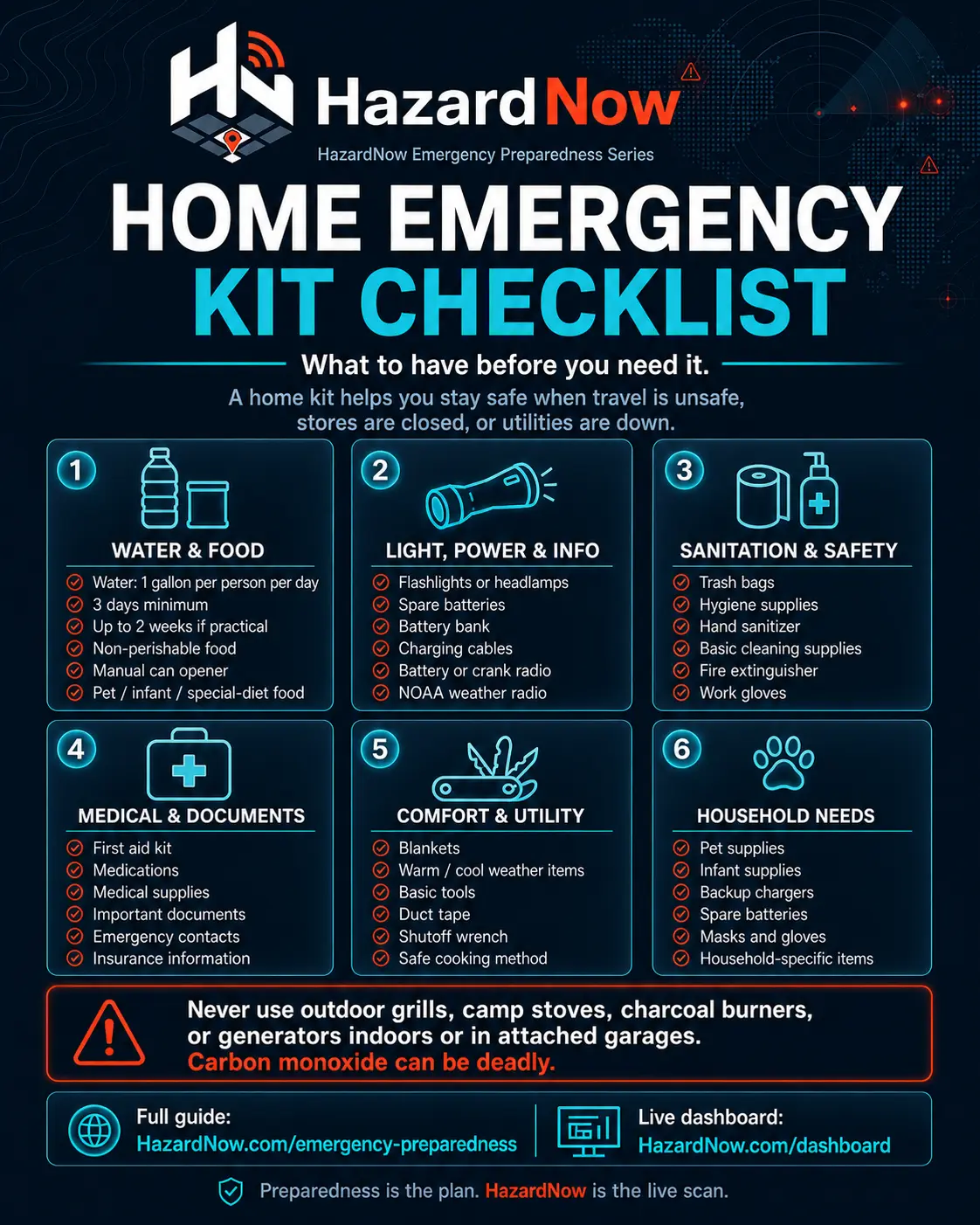
Start with the essentials
Plan your kit around likely short disruptions:
- Water, food, and safe food storage
- Lighting, batteries, and backup charging
- Medications, first aid, and health supplies
- Sanitation and hygiene items
- Copies of important documents
- Communication backups and weather information
CDC and Ready.gov guidance aligns on water planning: keep at least 1 gallon per person per day for 3 days, and build toward a longer supply (up to 2 weeks) where practical.
Generator and carbon monoxide safety
If you use backup power, carbon monoxide safety is non-negotiable:
- Never run a generator indoors or in an attached garage.
- Operate generators outside, away from windows, doors, and vents.
- Keep working CO alarms in your home.
The live dashboard can provide additional context on public signals such as power, weather, fuel, and water stress. For deeper planning checklists, review emergency preparedness resources and common questions in the FAQ.
HazardNow adds situational-awareness context and does not replace official notices, utility instructions, water-provider guidance, or emergency management direction.
Related HazardNow guides
Use these supporting pages to connect this article with the live dashboard, source notes, and preparedness guidance.
Continue exploring HazardNow
Review current public signals on the live dashboard, compare them with historical county records, see what data categories HazardNow tracks, or build a practical preparedness routine before conditions change.
- See today’s live U.S. hazard conditions
- FEMA and NOAA disaster history by county
- What HazardNow tracks
- Emergency preparedness
- FAQ
- Data sources
For official alerts, warnings, evacuation notices, or emergency instructions, use authoritative sources and local agencies.