

Shelter-in-Place vs. Evacuate: How to Think Before the Decision Is Urgent
Published May 23, 2026
View the current dashboard
HazardNow brings multiple public signals into one situational-awareness view. Open the live dashboard to review current indicators alongside the context in this article.
HazardNow provides context from public sources and is not a replacement for official alerts or emergency instructions.
This is a planning framework for calm preparation before conditions escalate. It is not live emergency direction, and official public safety instructions always come first.
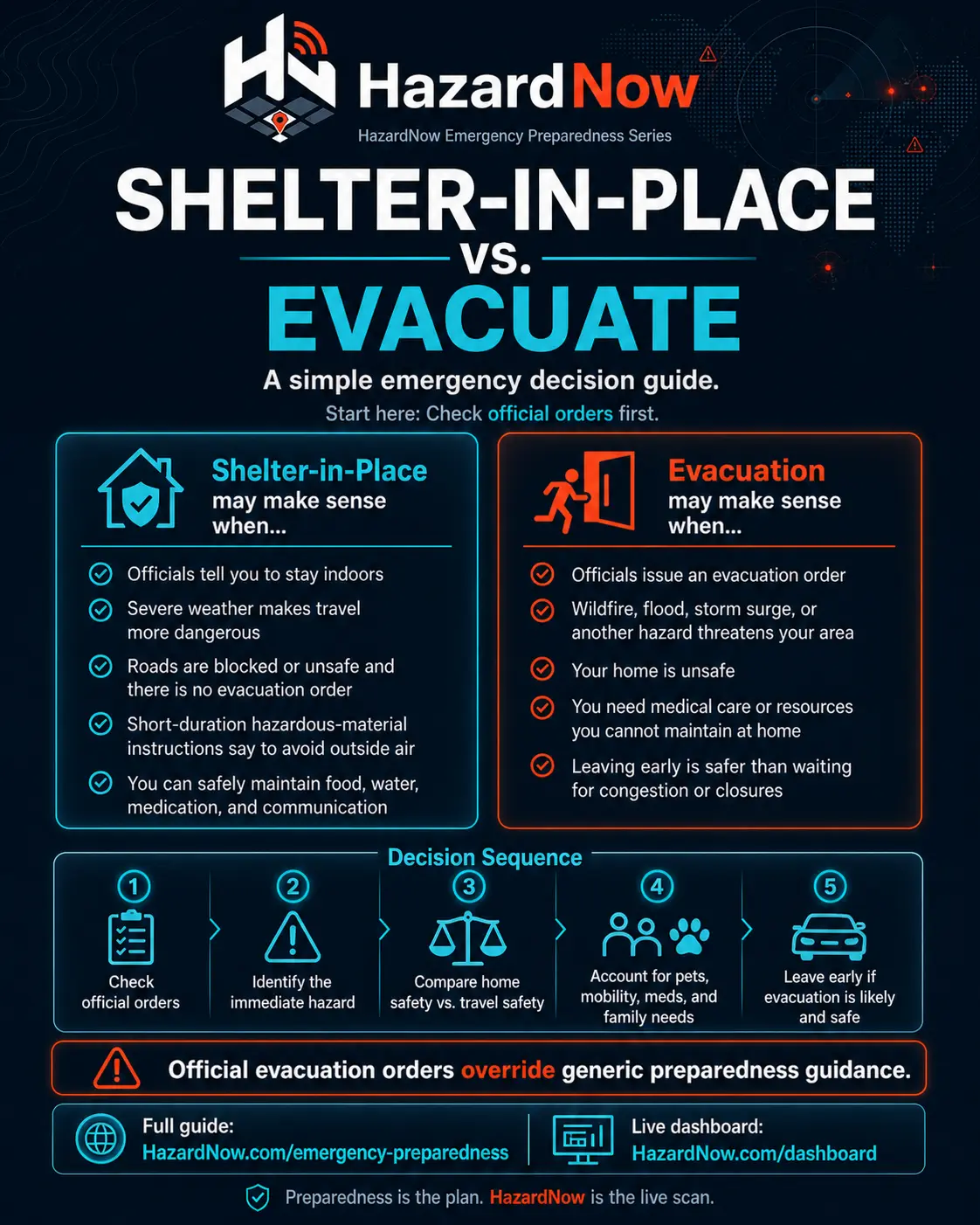
When sheltering may be part of planning
Depending on hazard type and official direction, sheltering may be part of a plan when:
- Officials instruct residents to stay indoors
- Road conditions are dangerous
- Routes are blocked or unstable
- No evacuation order has been issued
When evacuation planning becomes critical
Evacuation preparation matters when:
- Authorities issue evacuation orders
- Wildfire, flood, surge, or storm impacts threaten safety
- Medical or equipment needs exceed what home conditions can support
- Home safety is degrading (smoke, structural risk, utility loss)
- Leaving earlier reduces congestion exposure
Pre-identify routes, meeting places, pet logistics, mobility support, and fuel/charging plans. Keep local alert sources current.
HazardNow can help you review broader public signals on the live dashboard, but official evacuation instructions remain authoritative. For planning checklists, see the preparedness guide and additional clarification in the FAQ.
Related HazardNow guides
Use these supporting pages to connect this article with the live dashboard, source notes, and preparedness guidance.
Continue exploring HazardNow
Review current public signals on the live dashboard, compare them with historical county records, see what data categories HazardNow tracks, or build a practical preparedness routine before conditions change.
- See today’s live U.S. hazard conditions
- FEMA and NOAA disaster history by county
- What HazardNow tracks
- Emergency preparedness
- FAQ
- Data sources
For official alerts, warnings, evacuation notices, or emergency instructions, use authoritative sources and local agencies.